


Fiberglass Camper With Pop-Up Roof for Standing Room

Updated: Sep 18
Fiberglass Camper With Pop-Up Roof for Standing Room
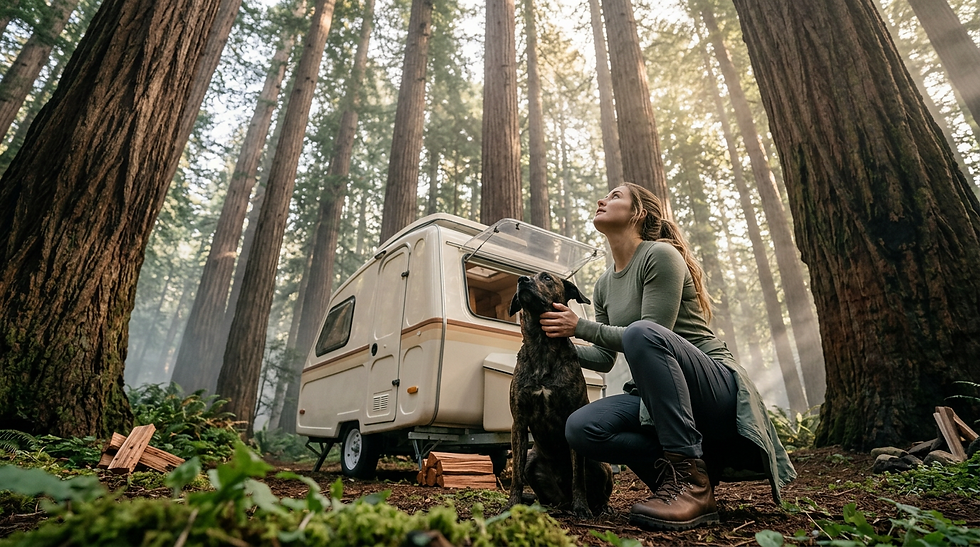
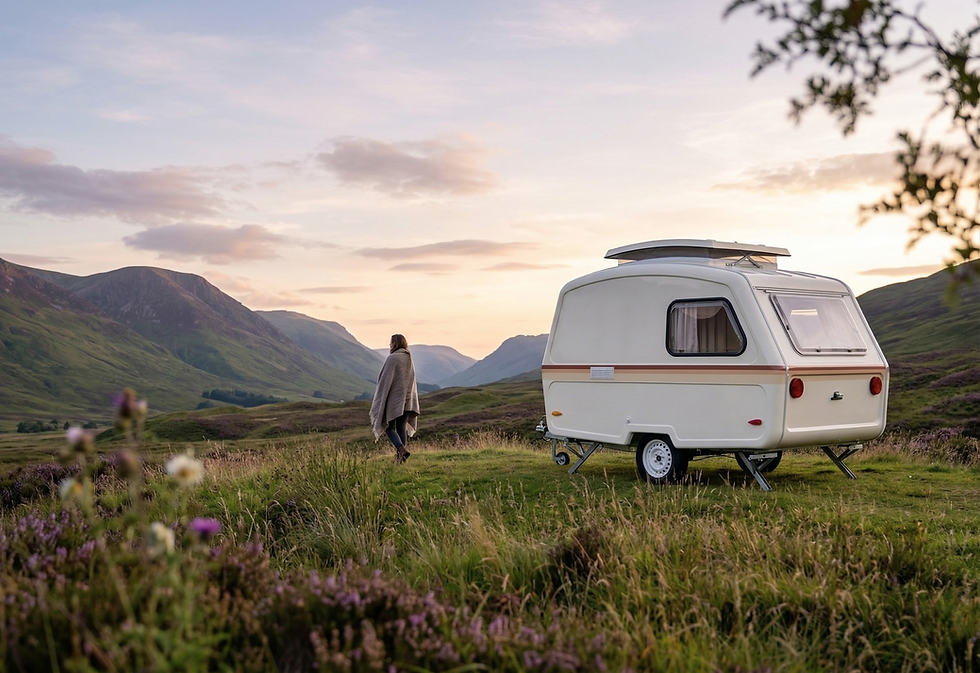
Clasica's 12-foot fiberglass camper solves a common towing tradeoff with a pop-up roof that raises interior height to 6 feet 1 inch. You get full standing room inside a compact, lightweight trailer, unlike bulkier full-height fiberglass campers such as the Scamp X or Escape E13, without sacrificing easy towing behind a standard vehicle.
Key Takeaways
Our HC1 model delivers lightweight flexibility at just 1100 lbs dry weight for easy towing.
The 17-foot Traveler provides full standing height inside without sacrificing the low-profile towing advantage.
Honeycomb fiberglass construction combines durability with minimal weight across our entire trailer lineup.
Pop-up roof design lets you stand comfortably inside while maintaining compact road profile dimensions.
Why Choose a Fiberglass Camper With a Pop-Up Roof?
A fiberglass camper pop up roof solves the oldest problem in small-trailer design: how to stand up straight without towing something the size of a house. Clasica builds vintage-inspired, lightweight fiberglass campers made for spontaneous weekend trips and simple, mindful travel. You get the low-profile, easy-tow shape you want on the highway, then real headroom the moment you park.
Once you're settled at camp, the roof lifts to open the interior to a 6-foot-1-inch ceiling height. Most adults can stand and move around comfortably, which changes how a small trailer actually lives day to day.
Does a pop-up roof make towing harder?
No. The design keeps the trailer's road profile low and light, so you avoid the drag and bulk of a full-height rig. Clasica's lightweight, easy-to-tow build lets you head out without hauling an oversized trailer or managing complicated systems.
What do you gain by choosing this design over a fixed-height camper?
Easier towing with most standard vehicles, no special truck required
Full standing room at camp, without the weight penalty on the road
Simpler setup, so weekend trips stay spontaneous instead of a chore
Clasica LLC designs and builds these campers out of Eugene, Oregon, grounding every trailer in a straightforward philosophy: travel light, travel often, and let the road stay simple.
What's Built Into the Frame and Suspension?
A galvanized steel frame anchors every Clasica camper, paired with German torsion suspension and sealed bearings for a smoother ride over rough roads. This combination keeps the trailer stable at highway speed while shedding the bulk found in oversized RV chassis. You get a foundation engineered for durability, not just for looks.
Weight matters just as much as materials here. Your fiberglass camper pop up roof design stays light enough to tow behind a standard passenger vehicle, so you skip the truck rental and the trip to a specialty tow shop. That's freedom built into the frame itself, not an afterthought bolted on later.
Why does suspension type matter for a small camper?
Torsion suspension absorbs road vibration more evenly than leaf-spring setups common on heavier trailers. For a lightweight camper, this translates into less sway on backroads and gravel. Sealed bearings add another layer of reliability, reducing maintenance stops on longer weekend routes.
Does a heavier frame mean a safer camper?
Not necessarily. Clasica's approach favors engineered materials over raw mass, giving you a rig that tows easily without sacrificing structural integrity. Every camper is designed and built in Eugene, Oregon, where the frame, suspension, and cozy interior come together into one road-ready package.
How Does It Compare to Other Lightweight Trailers?
Weight defines the difference. A fiberglass camper with a pop-up roof design like Clasica's skips the bulk and complicated hookups that come standard on larger rigs, keeping the whole setup easy to tow behind an ordinary car.
That lightweight approach matters most if you're chasing spontaneous weekends, not settling into a full-size RV lifestyle. Mindful travel means packing light, leaving fast, and not needing a diesel truck to do it.
Other builders in the fiberglass space take their own path. One well-known fiberglass trailer maker leans into flexibility, pairing a lightweight shell with a rear hatch, classic fenders, and a honeycomb fiberglass floor built for reconfiguring gear on the fly. Meanwhile, some ultra-light pop-up models skip fiberglass altogether, with dry weights near 840 pounds. Light enough for small four-cylinder cars, hybrids, and EVs to tow without strain.
Approach | Weight Focus | Best For |
Fiberglass pop-up roof (Clasica) | Lightweight, standard-vehicle towable | Spontaneous, mindful weekend travel |
Flexible fiberglass shell | Lightweight with modular hatch/floor | Adjustable cargo and layout needs |
Ultra-light pop-up frame | Around 840 lbs dry | Maximum towing flexibility, smaller vehicles |
Do pop-up roof campers sacrifice durability for lightness?
No — durability and low weight aren't mutually exclusive. Fiberglass construction stays strong and weather-resistant regardless of how light the trailer tows. A pop-up roof simply adds usable height without adding the frame weight of a full-height cabin.
FAQ
How tall does the interior get with the roof popped up?
Clasica's 12-foot fiberglass camper raises interior height to 6 feet 1 inch when the roof pops up, giving most adults full standing room once parked at camp.
Does the pop-up roof make the trailer harder to tow?
No. The design keeps the trailer's road profile low. Light, avoiding the drag and bulk of full-height rigs while still delivering easy towing behind a standard vehicle.
Where does Clasica build its fiberglass campers?
Clasica LLC designs and builds its campers in Eugene, Oregon, grounding every trailer in a philosophy of traveling light and keeping the road simple.
Conclusion
In closing, the pop-up roof design represents a thoughtful solution for travelers who refuse to compromise between mobility and comfort. By combining lightweight fiberglass construction with the ability to stand upright, Clasica delivers a camper that honors both the practical constraints of everyday towing and the genuine human need for space and dignity on the road. This approach to camper design reflects a deeper philosophy: that meaningful travel doesn't require sacrifice, only intentionality.

Comments